A Pillow Shaped Around Your Neck, Shoulders and Arms — Not the Other Way Around
The Ergo Pillow replaces the flat, uniform surface of a standard pillow with four contoured support zones designed to keep your head and neck aligned in every sleeping position.
- Four dedicated support zones for head, neck, shoulders and arms
- Memory foam that adapts to your contour and returns to shape
- Heat-dispersing, breathable, hypoallergenic construction
- 60-day money-back guarantee from the seller
Multi-pillow bundles currently listed at up to 70% off on the seller's page. Prices and discounts can change — always confirm at checkout.

Why a Regular Pillow Can Work Against You All Night
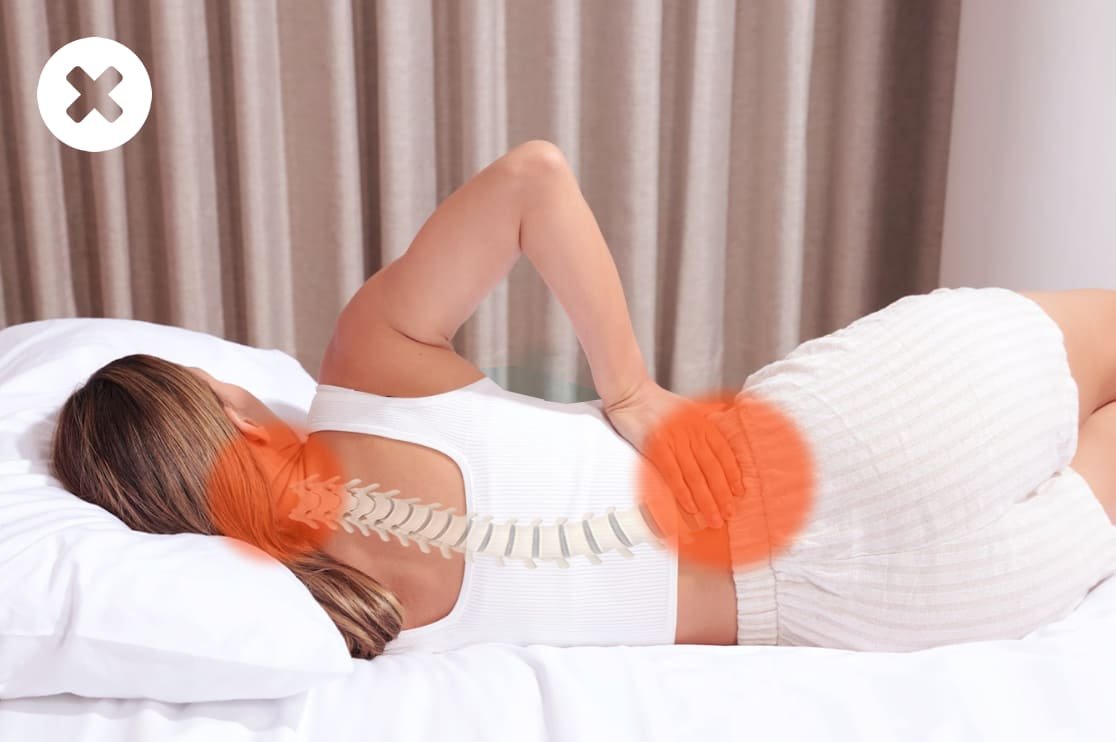
A conventional pillow is one uniform block of filling. Your head, neck, shoulder and arm all press into the same surface, so the pillow compresses where the most weight sits — usually under your head — and leaves your neck bridging an unsupported gap.
Over the hours, that small misalignment adds up. Side sleepers end up with a compressed shoulder and a tilted neck. Back sleepers let the chin drift, a posture often associated with position-related snoring. Stomach sleepers twist the neck to breathe.
The result many people recognize: waking up stiff, shifting position all night, or going through pillow after pillow without finding one that actually fits how they sleep.
Meet the Ergo Pillow
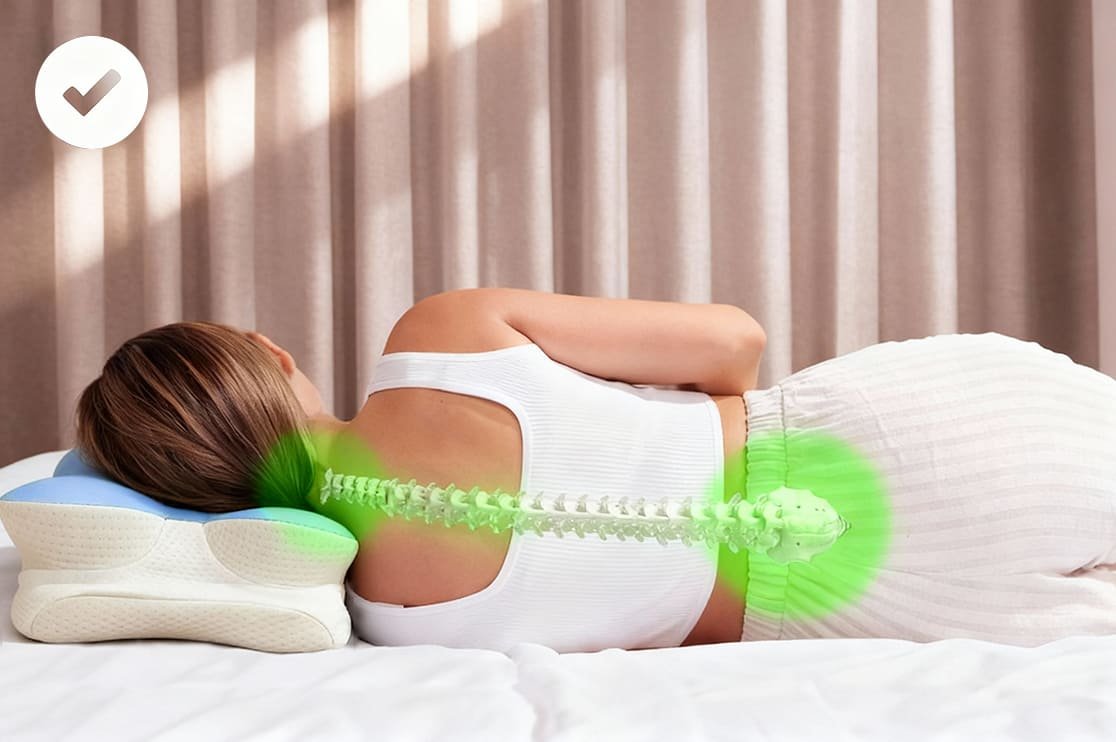
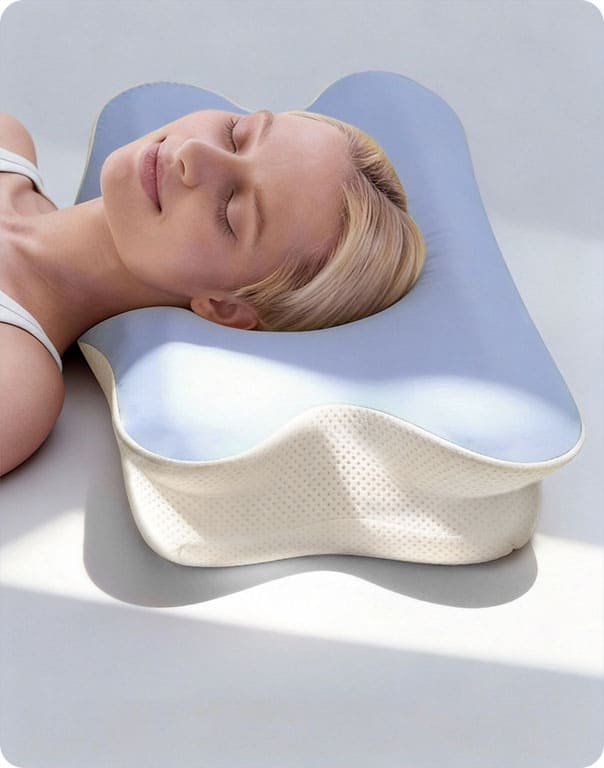
The Ergo Pillow is a contoured memory foam pillow built as a support system rather than a cushion. Its butterfly-style shape carves out a specific place for each part of your upper body: wings at the front, a relief zone for the shoulder, a central cradle for the head, and a lower area where your arm can rest.
The foam adapts to your contour while you sleep and returns to its original shape afterward, so the support stays consistent night after night instead of flattening out.
It comes in one size — about 24.4 inches long and 14.5 inches wide — designed to accommodate side, back and stomach sleeping on the same surface.
Four Support Zones, One Pillow
Each area of the contour has a job. Together they are what separates this design from a standard rectangular pillow.
Front Support Wings
Raised edges at the front keep your head from sliding forward off the pillow, so the support stays where you placed it — even when you change position during the night.
Shoulder Relief Zone
A recessed curve lets your shoulder tuck under the pillow instead of being pushed against it. Side sleepers get a natural fit with less pressure on the shoulder joint.
Central Core With Chin Support
The center cradles the head, supports the chin in a more neutral position, and includes a recess for the ear — which also leaves room for sleep headphones. The core is built to hold its shape over time.
Arm-Rest Area
A dedicated space below the head zone gives your arm somewhere to go. Instead of wedging your arm under a flat pillow until it goes numb, it rests in its own supported spot.
Built for Cool, Consistent Comfort
Beyond the shape, the materials are chosen to solve the two most common foam pillow complaints: heat buildup and lost support.

Heat-Dispersing Design
The pillow is designed to disperse body heat rather than trap it, helping the sleeping surface feel cooler than dense, closed foam.

Breathable Layers
A breathable construction lets air move through the layers, reducing the stuffy, humid feeling that builds up on non-ventilated pillows.

Hypoallergenic Build
The materials are described as hypoallergenic, a practical point for people who are sensitive to common bedding irritants.

Adaptive Memory Foam
The foam molds to your head and neck while you sleep, then recovers its shape — so the contour you bought is the contour you keep.
One Contour, Every Sleeping Position
You don't sleep in a single position all night — and the pillow doesn't assume you do.
Back Sleepers
The central cradle supports the natural curve of the neck and keeps the chin from drifting, holding the head in a neutral position.
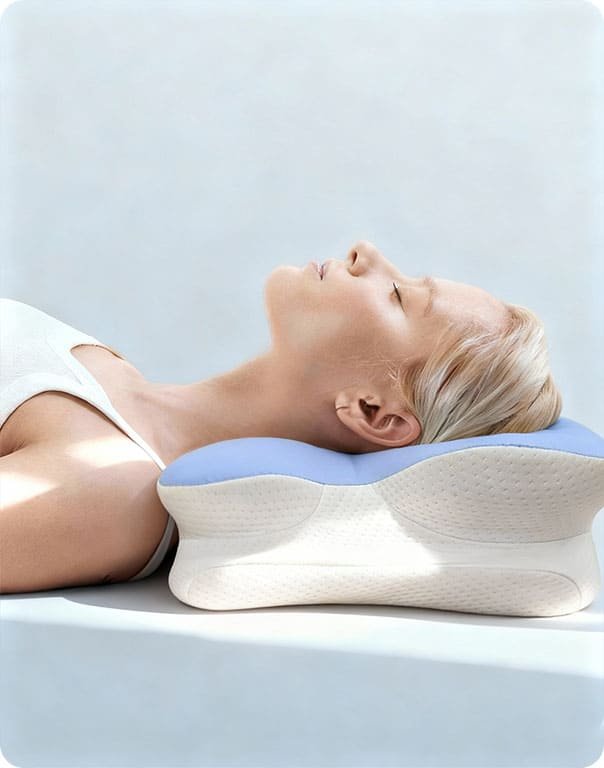
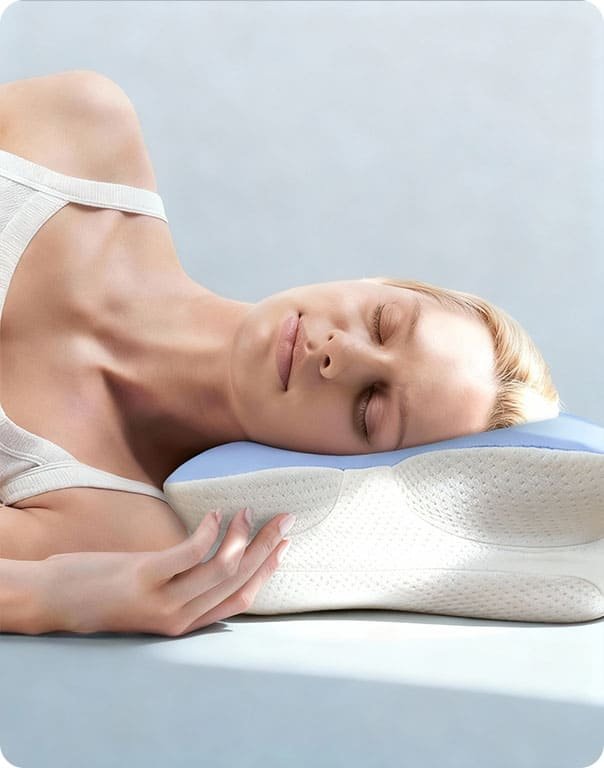
Side Sleepers
The shoulder relief zone lets the shoulder tuck in while the ear recess removes pressure from the side of the head — the position where flat pillows fail most.
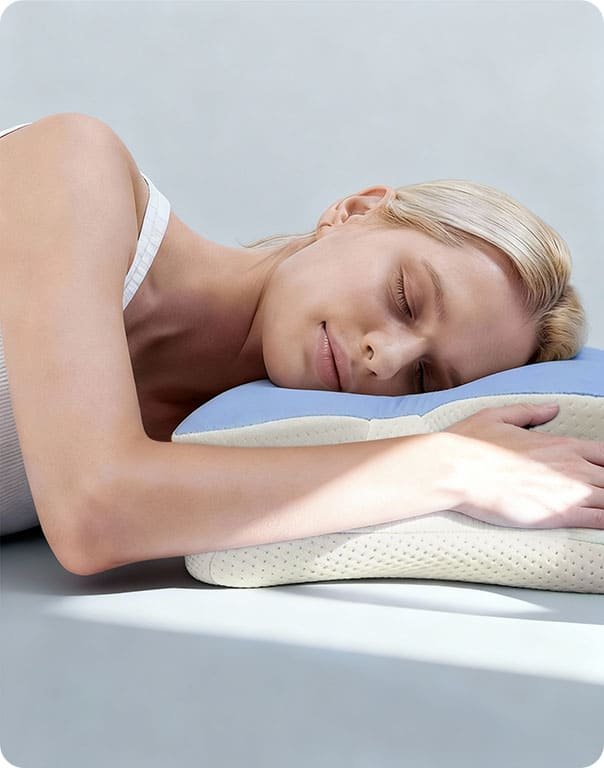
Stomach Sleepers
The lower profile of the front wings and the arm-rest area give stomach sleepers a place for the arm without forcing a sharp neck twist.
Naps and Recovery Rest
Because the contour does the positioning for you, even a short nap happens in an aligned posture instead of a collapsed one.
Contoured Support vs. a Conventional Pillow
The differences come down to how each design distributes your weight.
| What matters | Ergo Pillow | Conventional flat pillow |
|---|---|---|
| Support layout | Four dedicated zones for head, neck, shoulder and arm | One uniform surface for everything |
| Shoulder position (side sleeping) | Recessed relief zone lets the shoulder tuck under | Shoulder typically presses against or under the fill |
| Shape over time | Memory foam core designed to recover its shape | Loose fills commonly flatten and need fluffing |
| Arm placement | Dedicated arm-rest area | No defined space; arm usually goes under the pillow |
Specifications
The objective details, as listed by the seller.
The seller does not currently publish the pillow's height (loft) or weight. If those measurements matter to you, confirm them on the seller's page before ordering.
Things to Know Before Ordering
A few practical points worth having clear before you click through.
- The Ergo Pillow is sold online through the seller's order page — it is not a store-shelf product.
- It comes in one size and one design, as shown; there are no color or firmness variants listed.
- Height (loft) is not published by the seller. Contoured pillows feel different from flat ones, and the seller's FAQ notes an adjustment period of roughly 5–7 nights.
- The discount depends on quantity: at the time of writing, 50% off a single pillow scaling up to 70% off the 4-pack. Percentages and prices can change on the seller's side.
- Shipping is listed at checkout as UPS Ground with an estimated 3–5 business days.
- Purchases are covered by the seller's 60-day money-back guarantee — review the exact terms on their page.
Guarantee, Shipping and Checkout

60-Day Money-Back Guarantee
Try it for up to 60 days. If you're not satisfied, contact the seller's support for a refund under their return terms.
UPS Ground Shipping
Estimated 3–5 business days at checkout. Ships to the US, Canada, Mexico and several other listed destinations.
Secure Checkout
The order page states that transactions are secured and encrypted, with Visa and Mastercard accepted.
Current Bundles and Pricing
Prices below were taken from the seller's order page at the time of writing. The discount grows with quantity — the 4-pack works out to about $40 per pillow.
Prices, discounts and availability are controlled by the seller and may change at any time. The order page shows the final amount before payment.
How Ordering Works
Open the order page
Use any button on this page to reach the seller's order page with the current bundles and prices.
Pick your bundle
Choose between 1, 2, 3 or 4 pillows. The per-pillow price drops as the quantity goes up.
Review and complete checkout
Enter shipping and payment details, confirm the order summary and total, then place the order on the seller's secure checkout.
Frequently Asked Questions
Is the Ergo Pillow the Right Fit for You?
If you keep waking up stiff, shifting all night, or cycling through pillows that flatten within months, the problem may be the flat design itself — not the brand of pillow.
The Ergo Pillow answers that with a contoured, four-zone layout, adaptive memory foam and a heat-dispersing build, backed by a 60-day money-back guarantee. The main consideration before ordering: it comes in one size, its height isn't published, and contoured pillows take a few nights of adjustment.
